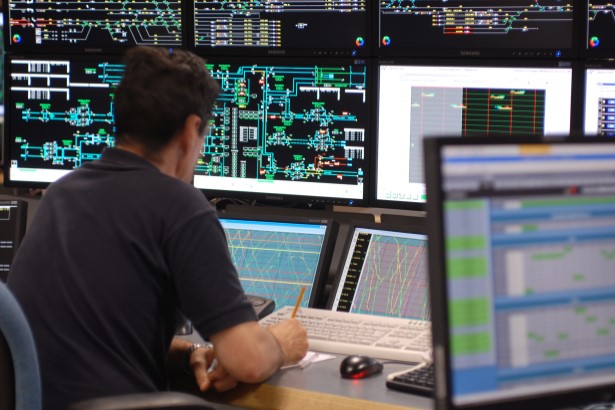
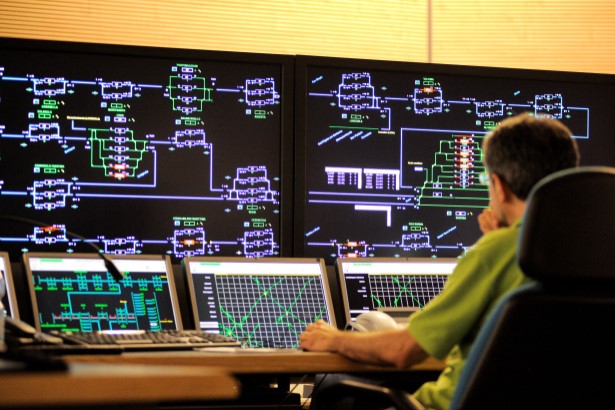
GSM-R (Global System for Mobile Communications — Railway) is an international mobile communications standard dedicated to railway applications, primarily utilised for links between trains and traffic control centres, and is an essential component of the European Rail Traffic Management System (ERTMS).
The Italian GSM-R network, developed from 2004 onwards, currently covers over 10,000 km of railway lines, including more than 1,000 km in tunnels.
FS Engineering is currently engaged in the issued for construction design and upgrade of the GSM-R system to support ERTMS rollouts on the Florence–Rome Direttissima high-speed line and across the main interoperable corridors: Milan–Genoa, Novara–Venice, Verona–Brenner, Milan–Chiasso, and Vicenza–Trieste–Villa Opicina. It is also delivering capacity enhancement interventions within the Rome and Milan railway junctions to support the High-Density ERTMS system.
Tunnel Safety
FS Engineering oversaw the design, manufacturing, and installation services for interfacing Multifunctional Portals and rail signalling systems.
These trackside systems monitor rolling stock in transit and are deployed along the line to protect tunnels exceeding 1,000 m in length. Utilizing camera networks, these systems ensure the continuous and automated monitoring of the rolling stock gauge. Simultaneously, thermal scanners detect on-board fires and open flames, transmitting any fault alerts directly to the Signalling System.
The European Rail Traffic Management System (ERTMS) is the European standard for ensuring the interoperability of national railway systems while enhancing traffic safety, reliability, and capacity.
FS Engineering delivered the ERTMS/ETCS train spacing systems, overlaid onto pre-existing national legacy networks (various types of automatic block signalling [BA] and train protection systems [SCMT]), across strategic sections in Northern Italy included in the key European interoperable transport corridors: Mediterranean, Rhine–Alpine, and Scandinavian–Mediterranean.
The works consist of the following lots:
Lot 1 - ERTMS Level 2 on the Novara-Padova-Venezia section (Mediterraneo Corridor)
Lot 2 - ERTMS Level 2 on the Verona-Brennero section (Scandinavian-Mediterranean Corridors)
Lot 3 - ERTMS Level 2 on the Milano-Genova section (Rhine-Alpine Corridor)
Lot 4 - ERTMS Level 1 on the Vicenza-Trieste/Villa Opicina section (Scandinavian-Mediterranean Corridors).
The aim was to develop an innovative signalling system capable of managing high-density train traffic without the need for capital-intensive infrastructure works, thereby maximising the utilization of existing infrastructure and technological systems.
The works were completed in 2024.
Milan, Florence and Rome Rail Hubs
The project involved the trackside deployment of ERTMS featuring High-Density (HD) functionality across the Milan, Florence, and Rome railway hubs, overlaid onto pre-existing train spacing and protection systems. The objective was to increase hub capacity by optimising the core components of the signalling system.
Specifically, the scope of work included:
ETCS (European Train Control System) for command and control functions, through the implementation of a continuous Level 2 system optimized and integrated with interlocking logic;
GSM-R for track-to-train communication, appropriately optimised to maximise Quality of Service and capacity in terms of channels and trains;
Traffic Management Layer, with the optimisation of traffic scheduling for high-density rolling stock and the associated route setting times.
In functional terms, an operational ERTMS HD system was established, characterised by fleets of specialised, consecutive trains capable of ensuring high traffic density within the hubs, while maintaining the capability for mixed operations between high-density equipped trains and non-specialised trains.
Furthermore, under degraded ETCS Level 2 conditions, high-density trains are capable of running using SCMT [legacy train protection] functionality.
The deployment schedule was strictly linked to the availability of Multi-Station Computer-Based Interlocking (ACC-M) systems at the respective sites. Consequently, system commissioning took place in functional phases, with final completion achieved between late 2023 and early 2025.
ERTMS is key to the network’s digital transformation
In addition to equipping the interoperable corridors and implementing the High-Density (HD) system, the rollout of ERTMS is also planned for the off-TEN network. This will sit alongside the accelerated deployment of the network's technological renewal masterplan—driven by ERTMS adoption—with the ultimate objective of progressively equipping the entirety of the Italian railway infrastructure. Concurrently, the decommissioning of Class B national legacy systems, such as SCMT and SSC, is scheduled.
To fully exploit the potential offered by ERTMS Level 2 and Level 3 applications, delivery works must be coordinated with a suite of complementary infrastructural and technological measures, including:
GSM-R enhancement and extension.
Upgrading Programme for legacy interlocking systems (ACEI, ACE) through the deployment of modern Multistation Computer-Based Interlocking (ACC, ACC-M).
Technological Masterplan for the implementation of the Multistation Command and Control System (SCC-M), aimed at upgrading non-remote-controlled lines and establishing interfaces with ACC-M and ERTMS architectures.