Contributing significantly to more sustainable transport
Green self-generation
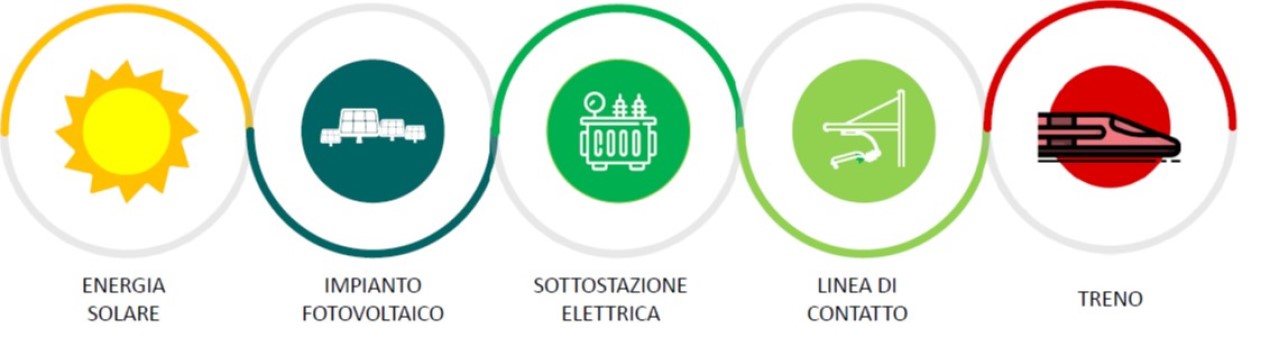
Installing photovoltaic panels on the roofs of stations, maintenance depots, and industrial areas, alongside energy efficiency upgrades for rolling stock and buildings, forms part of zero-emission sustainable mobility plans. The FS Italiane Group has launched a renewable energy self-generation programme. The target is to achieve 2 GW of new capacity from green sources to meet 40% of its energy requirements. This confirms the intention to move quickly towards carbon neutrality and the energy transition.
The annual energy generated would amount to approximately 2.6 TWh. This would ensure a CO₂ emissions reduction of around 800,000 tonnes. The capital expenditure required for the rollout of these installations is €1.6 billion. This represents a decisive acceleration towards the decarbonisation of transport, using clean, renewable energy supplied by dedicated solar farms.
Reducing emissions
Development of new electrification projects, with the phasing out of diesel traction, which can be integrated with new on-site energy generation facilities and the use of innovative battery rolling stock. This approach overcomes specific challenges relating to structural clearance or interference constraints with existing civil engineering structures.
In terms of energy efficiency and emissions, rail is among the most efficient transport modes. The FS Group is committed to a substantial reduction in CO₂ emissions by increasing the use of renewable sources, aiming to achieve carbon neutrality by 2050.
Improving the efficiency of the electrical system
Upgrading of railway electrical systems, covering both traction and station power supply.
Technological innovations have been introduced for traction energy regulation and regenerative braking recovery. In addition, energy audits of the Group’s stations and buildings have been conducted to reduce consumption while maintaining required system performance.