<img height="1" width="1" style="display:none" src="https://www.facebook.com/tr?id=2358479414501997&amp;ev=PageView&amp;noscript=1">

The development and modernisation of the  Italian legacy rail network in accordance with state-of-the-art infrastructure standards, integrated with the HS/HC system, addresses evolving mobility requirements driven by the growth of national and international passenger and freight traffic.

FS ENGINEERING SUPPORTS THE INTEGRATION AND REBALANCING OF TRANSPORT MODES

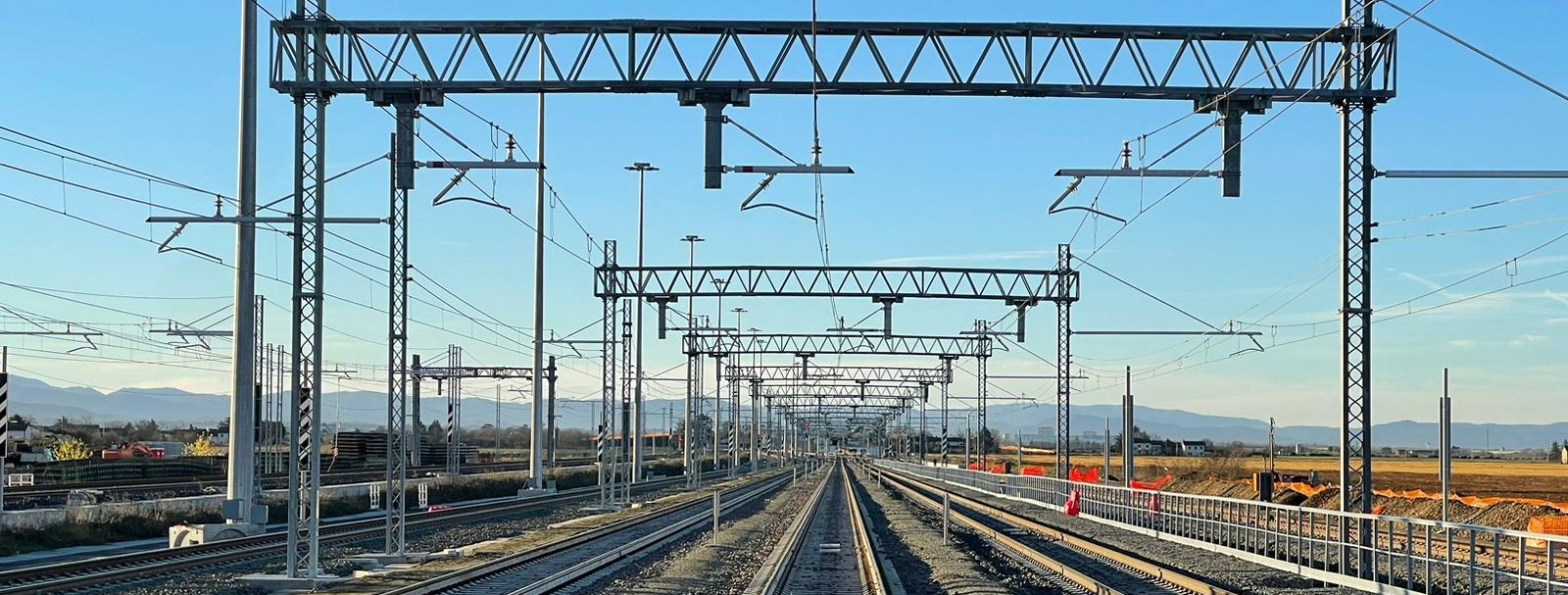
The technological upgrading of the Turin–Padua line, stretching approximately 400 km across Piedmont, Lombardy and Veneto, forms part of the modernisation programme for the national rail network, integrated with the High-Speed/High-Capacity system. FS Engineering is engaged in the design and delivery of command and control systems along the Avigliana–Padua section, including the strategic hubs of Turin and Milan.

The scheme involves the adoption of advanced Multi-station Computer-Based Interlocking (ACC-M) systems and the global supervision (Multi-Station Command and Control – SCC-M) system at the Milan Greco Control Centre, including the upgrading of lineside and station technological installations, to ensure safer, more efficient, and reliable railway operations.

The Venice–Trieste line represents one of the primary rail infrastructures in the North-East of the country, connecting the Veneto and Friuli-Venezia Giulia regions along an alignment of approximately 145 km. Currently subject to capacity enhancement and line-speed improvement works, the scheme aims to enhance service performance and reliability, optimising journey times along the route.

The scheme also involves the implementation of advanced command and control systems based on Multi-station Computer-Based Interlocking (ACC-M) and the global supervision (Multi-Station Command and Control – SCC-M) system at the Milan Greco Control Centre, including the upgrading of lineside and station technological installations, to ensure safer and more efficient railway operations.

The North Tyrrhenian Mainline represents one of the main rail corridors for passenger and freight traffic along the Genoa–Pisa–Livorno–Rome route, linking the primary intermodal hubs of the Upper Tyrrhenian region. FS Engineering is engaged in infrastructure and technological upgrades aimed at improving line performance, strengthening its strategic role in North–South traffic flows.

The scheme will contribute to increasing the capacity, reliability, and overall efficiency of operations, benefiting the competitiveness of rail transport and the logistical integration of the region.

The Adriatic Mainline runs along the eastern seaboard of the country, from Bologna to Lecce/Taranto, as a strategic rail axis connecting Northern Italy, Central Europe and the large ports of Southern Italy. Embedded within the freight corridors of the TEN-T Network, it represents one of the primary national rail routes for passenger and freight traffic. The planned interventions concern the completion of track doubling works on the remaining single-track sections and the technological enhancement of the entire line to improve overall performance.

The scheme will contribute to strengthening the strategic role of the route in North–South traffic flows, increasing the capacity, efficiency, and competitiveness of the rail transport system in the south-eastern quadrant of the country.

The Orte–Falconara Mainline is one of the primary cross-country routes of the Italian rail network, connecting the Rome–Florence and Adriatic Mainlines across the Central Apennines. The enhancement scheme, managed by FS Engineering, is aimed at improving rail services by expanding capacity, cutting journey times, and gradually eliminating at-grade interference with the road network.

The interventions comprise track doubling works, removing level crossings, upgrading stations, and the technological enhancement of lineside installations. The works will foster a modal shift from road to rail, delivering benefits in terms of efficiency, safety, and sustainability. In addition to the interventions already completed, the scheme covers the Terni–Spoleto, Spoleto–Campello, and PM228–Castelplanio sections.

The upgrading of the Rome–Pescara line is a strategic intervention for improving cross-country services, across the Apennine mountain chain, and linking the country’s Tyrrhenian and Adriatic seaboards. The scheme, managed by FS Engineering, is aimed at enhancing the competitive edge of passenger and freight services by cutting journey times, increasing service frequency, and developing intermodality. The Global Project covers several sections along the entire corridor, including Lunghezza–Guidonia, Rome–Tagliacozzo, Tagliacozzo–Avezzano, the Sulmona connecting chord, and the connections between Pratola Peligna, Scafa, Manoppello and the Abruzzo Interport.

The intervention contributes to achieving national and European objectives for competitiveness, sustainability, and energy security, fostering the integration of logistical systems and the reduction of infrastructure imbalances across the regions concerned.

The Bari–Matera line, a narrow-gauge railway operated by Ferrovie Appulo Lucane, is concerned by an improvement programme that includes the track doubling of the Bari Scalo–Palo del Colle section and the construction of the new Ferrandina–Matera La Martella rail link, a strategic infrastructure for connecting Matera to the national rail network and the HS/HC system.

The scheme integrates works on existing infrastructure with new construction work, such as tunnels, viaducts and stations, and is developed using a digitalised approach based on BIM methodology to ensure greater efficiency, safety and quality throughout the delivery process.

The track doubling of the Palermo–Messina mainline is a strategic intervention for expanding capacity within the Palermo and Messina nodes, to meet growing traffic demand and enhance overall service performance, also delivering benefits in terms of reduced journey times. Following the completion of the track-doubling works on the Fiumetorto–Ogliastrillo section, FS Engineering is currently engaged in the delivery of the Cefalù Ogliastrillo–Castelbuono section, developed as an alignment bypass running predominantly underground.

The scheme comprises two major tunnels—the Cefalù Tunnel and the Sant’Ambrogio Tunnel—interconnected by viaducts, alongside the construction of the new Cefalù underground stop and Castelbuono station, contributing to the modernisation of the infrastructure and improving its efficiency and overall service quality.

The Catania–Siracusa section of the Messina–Siracusa mainline is one of the most important rail corridors of Sicily, in terms of traffic volumes and population served. The line-speed improvement scheme, developed between Bicocca and Targia (and consisting of the Bicocca–Augusta and Augusta–Targia lots), is aimed at increasing line capacity and enhancing overall infrastructure performance.

The interventions will enable a significant reduction in journey times and an improvement of service regularity, safety and efficiency, strengthening the role of this rail link at a regional scale. As part of the TEN-T Scandinavian–Mediterranean Corridors, the scheme contributes to the development of a more integrated and competitive mobility system, in line with European sustainability and interconnection objectives.

The project for increasing train speeds on the Palermo–Agrigento line has the ultimate aim of improving the performance of the entire route through alignment corrections and infrastructure and technology upgrades. The relevant activities were predominantly managed by RFI, with the support of FS Engineering for the construction of the 2.1 Variant – Lercara Tunnel.

The intervention, approximately 6.5 km long, involves a new single-track bored tunnel for a length of roughly 2.8 km. The scheme also includes the construction of Emergency and Rescue Points at the tunnel portals, helping to strengthen the safety and reliability levels of the infrastructure.

The reinstatement project for the Palermo–Trapani rail line via Milo involves civil engineering and track works along the Alcamo Diramazione–Trapani section, aimed at the re-opening of the line. Provision is also made for the electrification of the Piraineto–Alcamo Diramazione section, with the objective of improving the reliability and efficiency of this rail link located in the western quadrant of Sicily.

The intervention will restore full functionality to the line, enhancing transport services and integration with the regional transport network.

The route represents a strategic corridor connecting the Tyrrhenian and Adriatic mainlines and securing a rail link between Sicily and Apulia. The upgrades, line-speed improvements, electrification and technological enhancement works along the Ionian Mainline and the Sibari–Catanzaro–Lamezia Terme Centrale section enable significant improvements in the quality, reliability and competitiveness of passenger and freight services.

In this case, FS Engineering is engaged in the renewal and enhancement of the Metaponto–Sibari and Sibari–Cosenza lines, which form part of the Gioia Tauro–Taranto freight route. The construction of a new connecting chord will allow the direct routing of trains to and from Sibari onto the Paola–Cosenza line, strengthening the integration of national infrastructure corridors.

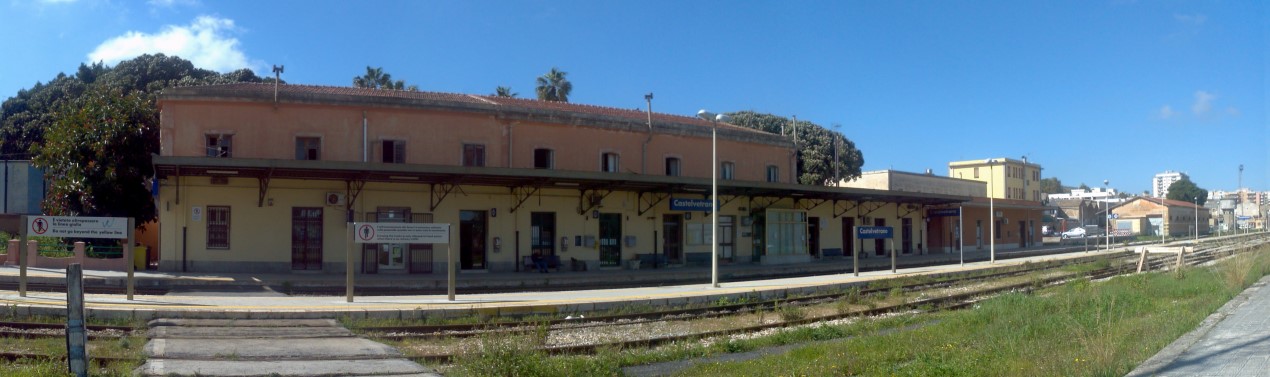
An infrastructure and technology enhancement programme is underway in Sardinia for the regional rail network, aimed at improving transport services and overall accessibility. In the medium term, the plan provides for the strengthening of core rail links, particularly the Cagliari–Oristano route and services to and from Cagliari Elmas Airport. In the long term, the scheme provides for the overhauling of the operational model to improve train speeds, increase services, and enhance station accessibility. The roll-out of electrification and the adoption of the ERTMS system will deliver further benefits in terms of capacity, traffic regularity and safety.

Key interventions include the completion of the track doubling works on the Decimomannu–Villamassargia section and the construction of the rail link between Olbia and Olbia Costa Smeralda Airport, contributing to strengthening the integration and efficiency of the regional mobility network.

A WEALTH OF EXPERIENCE ABROAD