FS Engineering at the ITA World Tunnel Congress 2026
Excellence in railway tunnelling across safety, innovation, and complex geotechnics
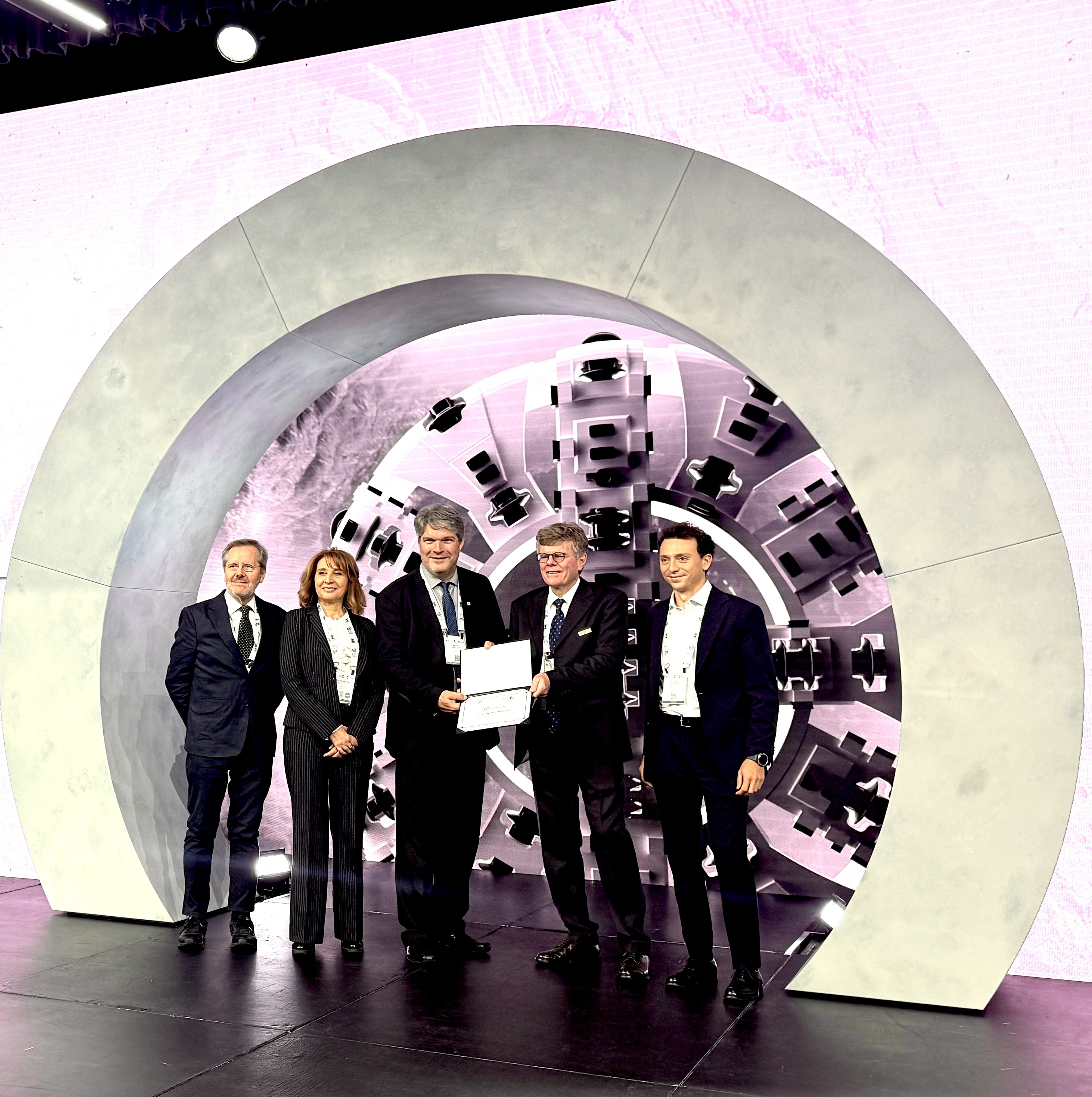
FS Engineering’s participation in the ITA World Tunnel Congress 2026 in Montréal, Canada represented an important opportunity for international exchange on the key topics of railway tunnel engineering. The high level of the contributions presented highlighted advanced expertise in the design of complex underground works, with particular focus on tunnel safety, innovation in structural solutions, and the management of geotechnical challenges in extreme environments.
In his opening remarks, the President of the ITA – International Tunnelling and Underground Space Association, Andrea Pigorini, provided an overview of the sector’s future prospects, emphasizing how advances in materials, machinery, TBM technologies, as well as design through digital information management methods and tools, are enabling the growing demand for resilient underground infrastructure to be met.
Across all these areas, FS Engineering reaffirms its role as a benchmark in railway tunnelling, both nationally and internationally, through an approach that integrates research, design, and operational application.
On the occasion of the Congress, FS Engineering also received a prestigious award in recognition of its contribution through the publication of four papers.
Tunnel safety and emergency management in railway tunnels
One of the key topics addressed concerns safety in twin-bore railway tunnels, with particular attention to the protection systems of escape routes under emergency conditions.
The analyses presented explored the design criteria for cross-passages, highlighting the crucial role of pressurizing protected areas to prevent smoke ingress and ensure safe evacuation conditions. The approach illustrated integrates aerodynamic aspects, European regulatory requirements, and design solutions developed based on experience gained in the construction of complex railway infrastructures.
Safety is not treated as a single system component, but as an integrated system in which architectural, structural, and MEP design work together to ensure reliable performance even in critical scenarios.
Innovation in materials and structural solutions for railway tunnels
Significant attention was given to innovation in structural materials, with a focus on the application of steel fiber reinforced concrete (SFRC) in railway tunnel linings.
The contributions highlighted the evolution in design approaches enabling the extensive use of SFRC as an alternative to traditional reinforcement, emphasizing benefits in terms of mechanical performance, durability, and sustainability. Particular focus was placed on design challenges related to fire behavior, addressed through new experimental approaches for assessing spalling phenomena and qualifying mixes under realistic operating conditions.
These experiences demonstrate FS Engineering’s ability to translate regulatory and technological innovation into scalable solutions while maintaining high standards of safety and reliability.
Design of tunnels in complex and extreme geotechnical contexts
Another key area of discussion involved the design of railway tunnels in highly complex geological settings, characterized by significant lithological variability, deep overburden, and critical geomechanical conditions.
The case studies presented illustrated the main excavation challenges in mountainous and high-complexity geotechnical environments, highlighting the importance of analyzing interactions between adjacent structures, controlling deformations, and adapting support solutions according to the conditions encountered during excavation.
The approach combines advanced modelling, real-time monitoring, and adaptive design, confirming the value of engineering capable of responding flexibly to subsurface uncertainties.
TBM tunnels in complex glacial deposits in the Greater Toronto Area
An additional contribution presented at the World Tunnel Congress examined the design and construction challenges associated with mechanized tunnelling in complex glacial deposits in the Greater Toronto Area, with reference to a twin-bore metro project. In such contexts, constructing two closely spaced tunnels requires advanced approaches to analysis, deformation control, and geotechnical risk management.
The work highlighted the key role of numerical modelling, construction-phase monitoring, and flexible construction strategies, with particular focus on tunnel-tunnel interaction and the protection of existing assets. This experience shows how complex geotechnical environments require close integration between design, modelling, monitoring, and construction control to ensure the safety and reliability of underground works.
A contribution strengthening FS Engineering’s positioning in tunnelling
Overall, participation in the World Tunnel Congress showcased the breadth and depth of FS Engineering’s expertise in railway tunnelling: from operational safety to material innovation, from structural design to the management of geotechnical complexity.
A body of knowledge built through hands-on experience and shared within an international context, reinforcing FS Engineering’s role as a leading technical partner in the delivery of safe, resilient, and sustainable underground infrastructure.