Catacome di San Callisto: Innovation and technology at the service of cultural heritage
Italferr in the project: "Integrated techniqes for understanding and enhancing the religious landscape of the Via Appia in the suburbs of Rome (4th–7th century).
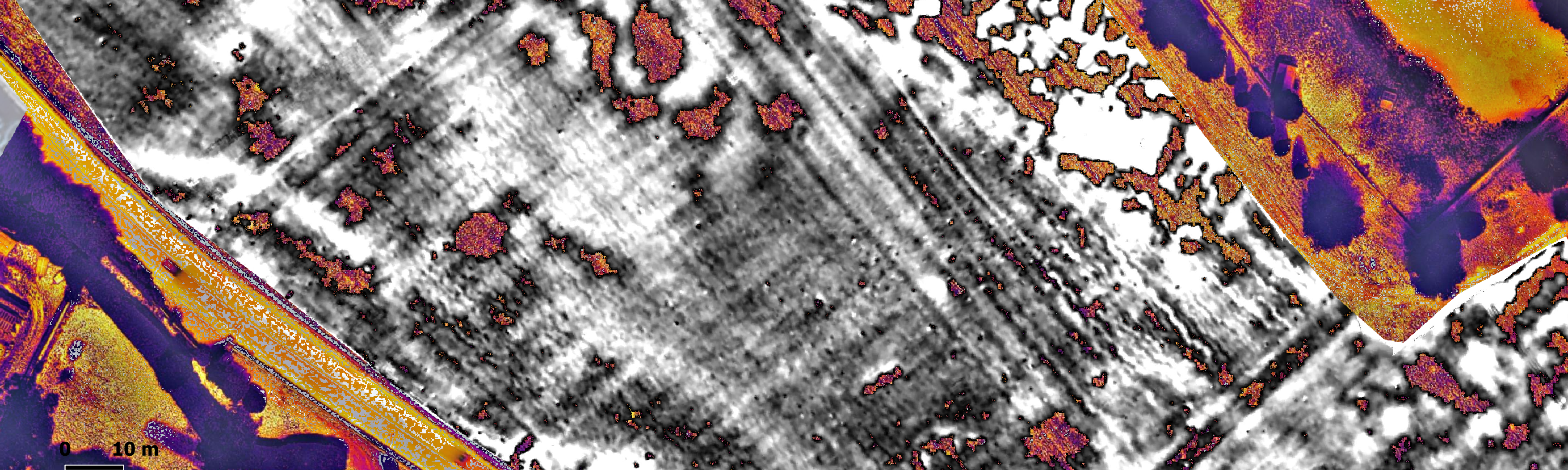
As the infrastructure and engineering arm of the Ferrovie dello Stato Italiane Group, Italferr remains at the forefront of combining technological progress with the protection of cultural heritage. Commissioned by the University of Tuscia in Viterbo—which, alongside Tor Vergata University of Rome, was awarded a PRIN (Research Projects of National Relevance) grant—Italferr participated in an innovative pilot project aimed at investigating the Catacombs of St. Callixtus within Rome's Appian Way Regional Park, one of the world's most significant underground archaeological complexes.
An advanced technological approach. Remote e Proximal Sensing.
The initiative relies on the use of remote and proximal sensing technologies. These advanced methods allow for the collection of detailed data regarding the conservation status and structural integrity of the catacombs without the need for invasive interventions. Representing the future of archaeological investigation and diagnostic analysis, these techniques ensure the absolute protection of cultural assets while enhancing data acquisition accuracy.
- Remote Sensing: Utilising sensors mounted on airborne or satellite platforms to gather data across extensive areas, enabling preliminary analysis and large-scale monitoring.
- Proximal Sensing: Applying onsite diagnostic tools, such as ground-penetrating radar, thermography, and spectroscopy to investigate the structural and material characteristics of artefacts.
Specifically for the operations at the Catacombs of St. Callixtus, ultra-high-resolution LiDAR, thermal, and multispectral imaging were conducted, alongside extensive geophysical surveys using magnetometric and ground-penetrating radar methods.
The ambitious project aimed to achieve:
· Topographical Mapping: Mapping the complex topography and occupation of the area between the first and third mile of the Via Appia and across to the Via Ardeatina, by integrating innovative methodologies refined during execution.
· Landscape Reconstruction: Reconstructing the landscape and its evolution between Antiquity and the Middle Ages, with particular focus on the road network and the emergence of religious structures within this parte of the Rome outskirts (suburbium).
· Targeted Excavation Planning: Facilitating more informed planning for trial trenches, an aspect of critical importance within the practice of preventive archaeology.
· Sensor Validation: Validating the data responses of various sensor arrays by comparing them with buried structures already mapped during previous investigations.
A model of synergy between research and industry
The partnerships with the Universities of Tor Vergata and Tuscia represent an excellent example of synergy between scientific research and industrial application. Leveraging its extensive experience in managing complex projects, Italferr acts as a bridge between the academic world and operational field requirements, fostering the adoption of innovative solutions for the benefit of the local communities.
This project is not merely an opportunity to enhance one of Rome's most significant archaeological sites; it also represents a major step forward for sustainability and digitalisation within the cultural heritage sector. Applying technology to conservation makes it possible to preserve historical heritage for future generations while minimising the impact of human activities on the site.
Italferr's commitment to the Catacombs of St. Callixtus serves as a concrete example of how engineering and technology can seamlessly integrate with the protection of cultural heritage. Through initiatives of this calibre, the company and the FS Group reinforce their role not only as leaders in the infrastructure sector, but also as key custodians of Italy's cultural identity.
