Ecosystem services as a decision-making tool in the preliminary design phases of railway infrastructure
FS Engineering’s approach to integrating biodiversity, sustainability and process quality
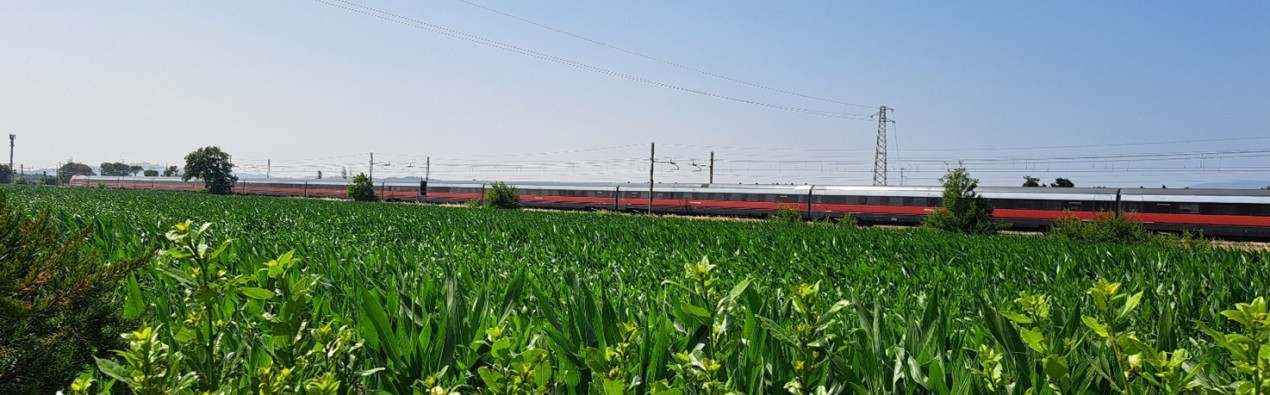
Photo credit: Giuseppe Crisà, FS Engineering
The design of complex, linear infrastructure—particularly railways—demands informed, transparent, and responsible decision-making. This is especially critical during the early stages, when design flexibility is at its peak and choices have a decisive impact on a project’s long-term sustainability. At this phase, fundamental processes are initiated to identify infrastructure corridors and establish initial route configurations based on integrated landscape-based and engineering assessments.
Within this framework, FS Engineering utilizes decision-making models that systematically integrate environmental, social, and economic dimensions. By moving beyond traditional, restrictive regional planning interpretations, the company adopts proactive methods and analytical criteria specifically designed to safeguard biodiversity. These assessments align with the mitigation hierarchy (avoid-minimize-restore-compensate), prioritizing the recognition and enhancement of areas with high ecosystem value. These areas provide essential ecosystem services—the benefits that communities derive from healthy ecosystems (MEA, 2005). By avoiding interference with these natural systems, infrastructure can be integrated into the local environment in a more balanced and sustainable way, protecting the value of natural capital throughout its entire lifecycle. This approach promotes more informed and resilient design choices, mitigates ecological risks, and strengthens the alignment between engineering, spatial planning, and global sustainability objectives.
Contribution to EU biodiversity strategies
Against the backdrop of international sustainability and ecological transition goals, infrastructure design must fundamentally address its relationship with the natural world. FS Engineering views this challenge as an opportunity to rethink the role of infrastructure, structurally embedding the protection of biodiversity and natural capital into its core design methodologies and sustainability policies. This approach is fully aligned with European Union mandates, such as the EU Biodiversity Strategy for 2030, which aims to halt biodiversity loss and restore degraded ecosystems. It also reflects the EU Green Infrastructure Strategy, which champions regional planning models that integrate ecological networks and nature-based solutions as vital components of community well-being. Adhering to these guidelines ensures the development of truly sustainable infrastructure, while making a measurable contribution to the United Nations Sustainable Development Goals (SDGs)—specifically SDG 15, which is dedicated to the protection of terrestrial ecosystems and the preservation of biodiversity.
The project to speed up and upgrade the Adriatic railway line
Sustainability criteria for the conservation of natural capital were central to the preliminary route analyses for the Adriatic railway line upgrade. In this project, sustainability was not just a goal, but a defining lever of the entire design process. Alongside traditional technical and functional assessments, the project included specialized analyses to classify areas of high ecosystem value. These were developed using thematic land-use maps, such as Corine Land Cover, to precisely identify and categorize land surfaces within the study area. These findings guided designers in selecting solutions that minimize interference with natural systems. By prioritizing routes that avoid sensitive areas—or by utilizing tunnels and viaducts where avoidance was not possible—the project adopted the most effective engineering methods for limiting environmental disruption and mitigating impacts on local ecosystems.
FS Engineering in European networks for biodiversity and sustainable infrastructure
FS Engineering’s commitment to biodiversity is further demonstrated through its active participation in technical working groups and consultation initiatives focused on refining environmental assessment methodologies. To support this, the company has established a dedicated internal working group on biodiversity—a collaborative forum for technical analysis, knowledge sharing, and the development of specialized tools for design teams. On an international scale, FS Engineering is a key participant in European initiatives, including the recently launched Alliance for Connecting Railways and Restoring Nature (ACORN), promoted by the International Union of Railways (UIC). This alliance fosters dialogue among global rail stakeholders to share innovative methodologies for integrating biodiversity conservation and natural capital restoration into infrastructure planning and management. Through these platforms, FS Engineering spearheads methodological advancement, placing ecosystem services at the centre of the international conversation. By championing this approach, the company ensures that a deep understanding of local areas remains a fundamental pillar in the design of sustainable infrastructure.