THE ENABLING FACTOR FOR DIGITAL TRANSFORMATION
Information Management forms the foundation of digital transformation, based on the structured and coordinated management of information relating to an asset throughout its entire life cycle, from the initial design stages right through to decommissioning. This approach ensures the traceability of data and its accessibility to the various stakeholders in the supply chain, guaranteeing consistency, continuity of information and high-quality decision-making.
For us, digital innovation hinges on process standardisation, which we regard as a cornerstone for ensuring efficiency, quality and reliability in the adoption of information management methods and tools. The definition of shared collaborative workflows promotes the dissemination of digital know-how, best practices and company guidelines, contributing to the consolidation and evolution of the BIM Management System.
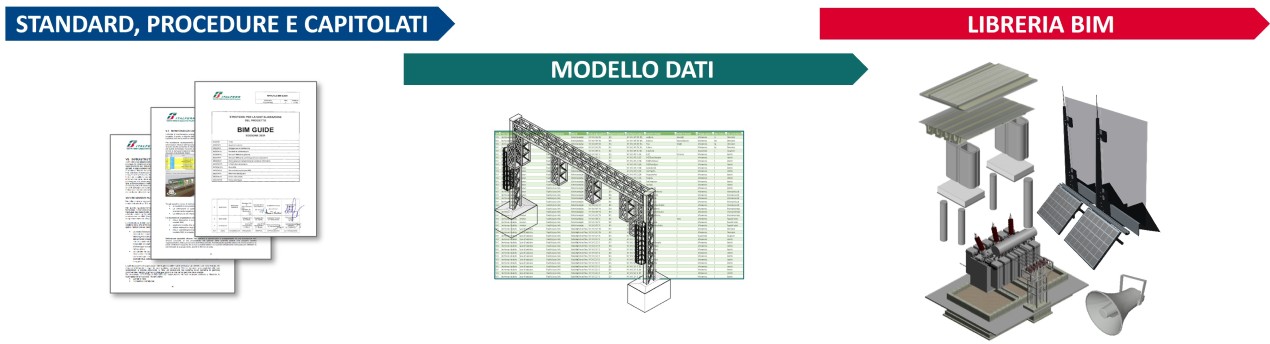
A central role is played by the structuring of the “BIM Object Library”, a database containing over 1,200 descriptive standards for railway infrastructure, covering both geometric and information aspects. To support the Library, the definition of a Data Model that encompasses all works can enable the association of uniform, standardised information properties to each BIM element, which can be easily integrated into any infrastructure project.
The ‘BIM Library’ and the ‘Data Model’ have been developed to systematically address the complexity of structural works, ensuring an integrated, shared, and consistent approach throughout lifecycle of the infrastructure.
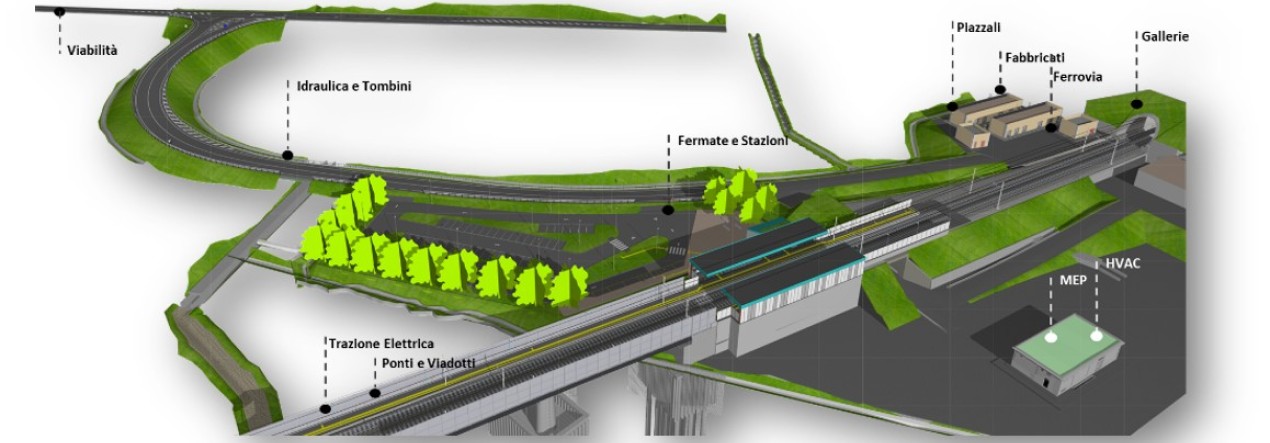
Thanks to the adoption of advanced methods and tools for digital information management, every design component is accurately archived and described generating a wealth of information that can then be used for designing, maintenance, operational management, and the assessment of environmental impacts. This wealth of information remains accessible over time, also through Business Intelligence tools.
This produces a life-cycle-oriented approach that builds on the available technical information from the initial stages of the project, supporting informed, sustainable, and efficient decision-making processes.
OPTIONEERING REPORTS AND DIGITAL INFORMATION MANAGEMENT
An integrated approach to sustainability and design efficiency
Optioneering reports, which look into the feasibility of project design alternatives, can serve as a key step in planning complex infrastructure assets. They are not just a regulatory requirement (under Article 41 of Legislative Decree 36/2023 and Annex I.7 to the Public Contracts Code but a fundamental tool for the appraisal of design alternatives, in terms of their sustainability, cost efficiency, and value for the community.
Optioneering reports, which look into the feasibility of project design alternatives, can serve as a key step in planning complex infrastructure assets. They are not just a regulatory requirement (under Article 41 of Legislative Decree 36/2023 and Annex I.7 to the Public Contracts Code but a fundamental tool for the appraisal of design alternatives, in terms of their sustainability, cost efficiency, and value for the community.
These options appraisal reports identify and analyse the design options in line with the objectives, needs, and qualitative and Client’s project brief (i.e. the foundational document compiled by the client outlining project goals, high-level objectives, KPIs, and operational needs). By analysing the impact the infrastructure can have on the local, environmental, landscape, cultural and archaeological environments, the optioneering report can effectively support decision making and steer the selection process toward a specific design option or preferred alternative that ensures the best balance between costs, benefits, and environmental protection.
The use of collaborative platforms and information models enables accurate and continuous monitoring of the entire analysis process, from the timely identification of critical issues to risk assessment. The adoption of a structured information system also ensures the effective archiving and traceability of data, fostering continuity between the project stages, from preliminary design to construction.
Our company has therefore chosen to lead the way in innovating the options appraisal process by introducing the methods and tools for digital information management, on a purely voluntary basis. This vision has taken shape in the formulation of a unified guideline that sets out the company standards for the digital drafting of Feasibility Documents, extending the information-based approach to the entire project lifecycle. This model results in the advance production of critical analyses, the timely identification of key design issues, and, last but not least, the significant reduction of risks that would otherwise arise downstream in the design process.