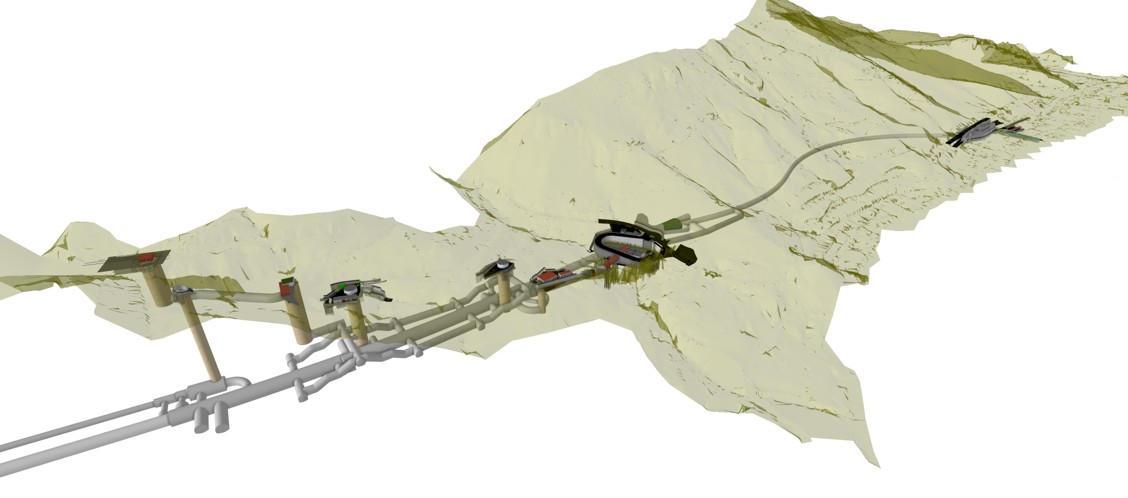
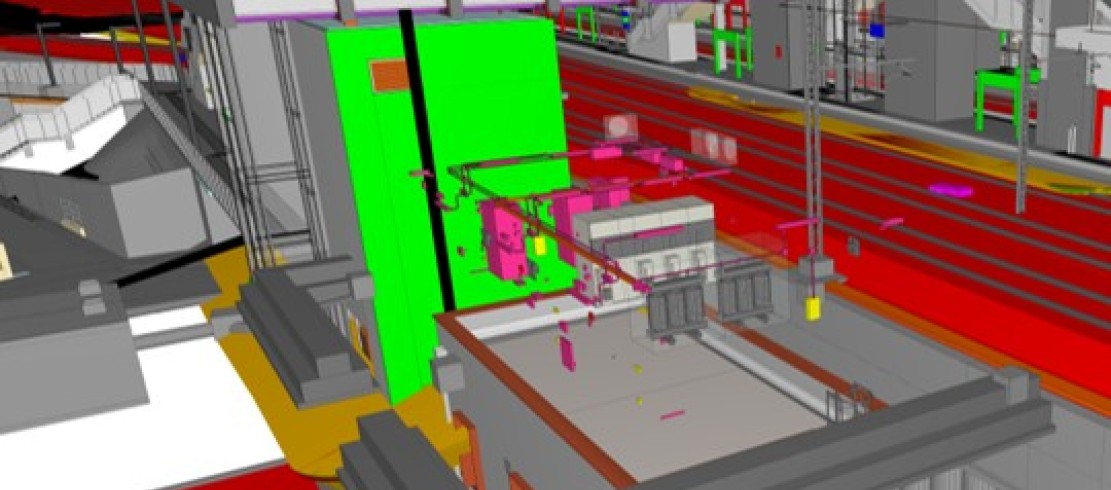
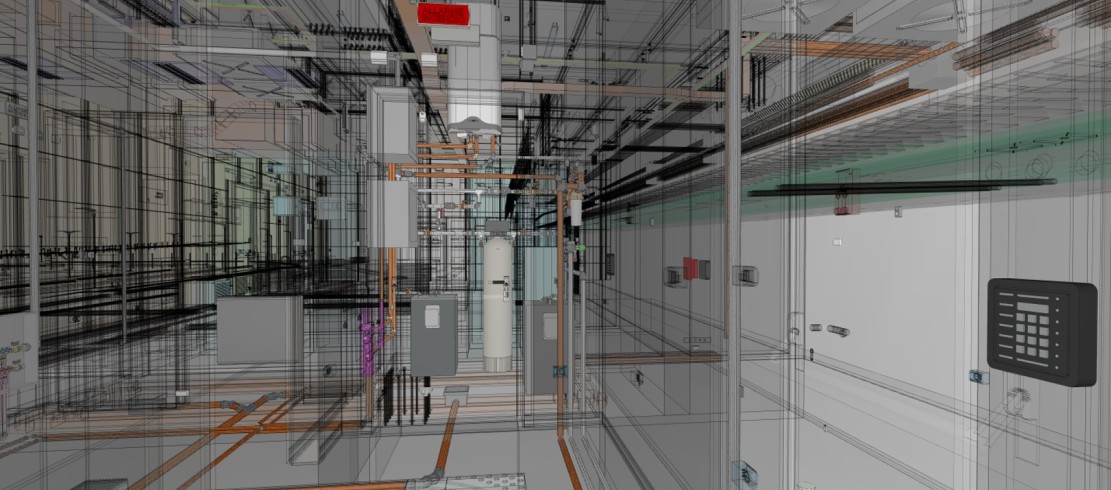
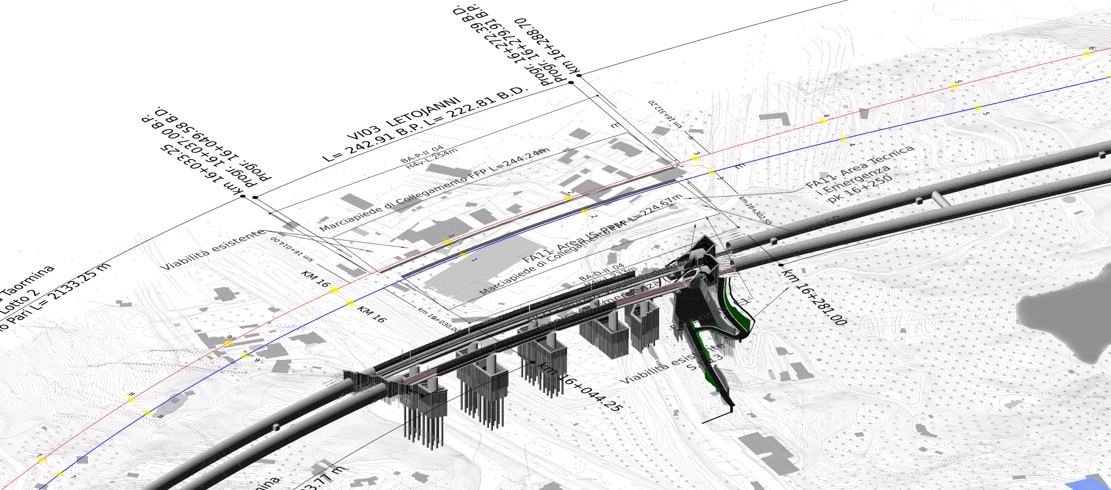
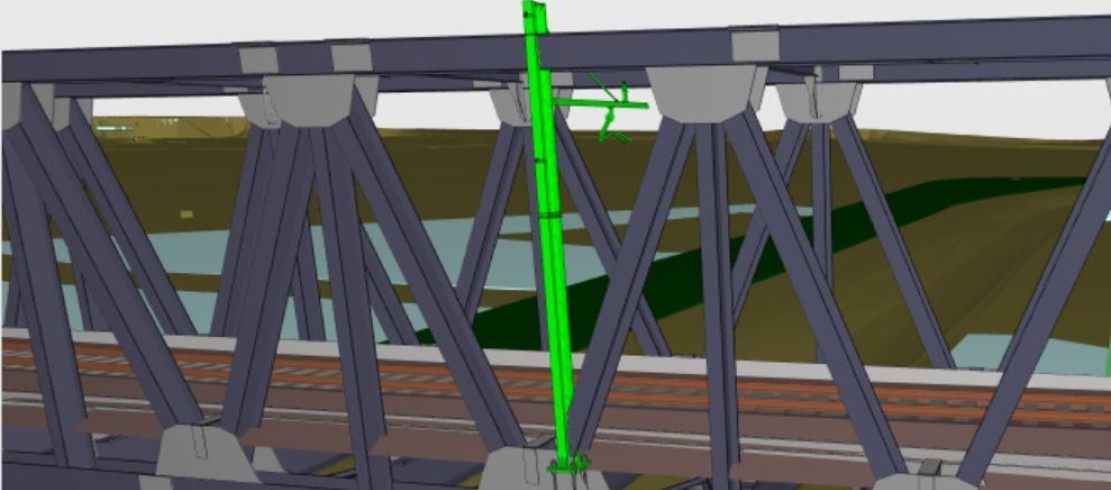
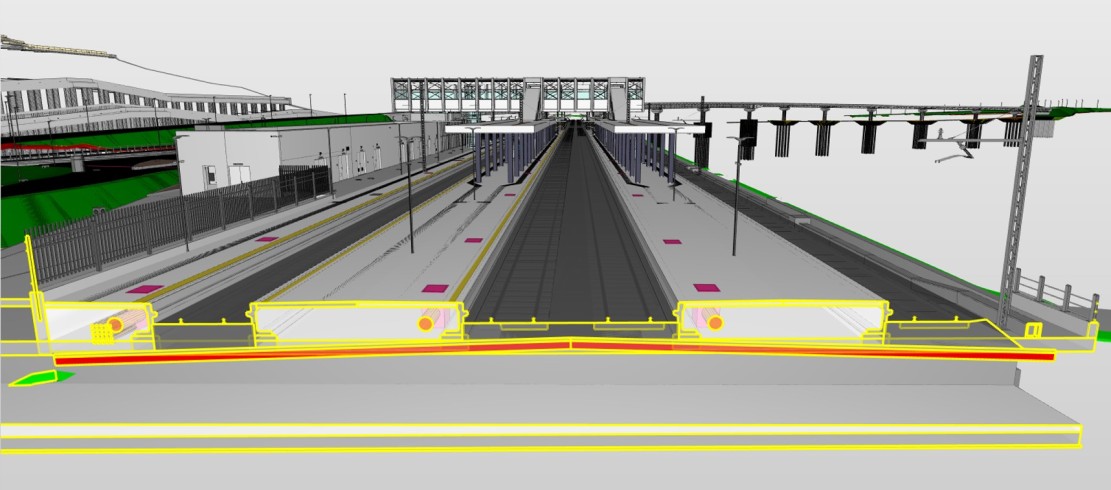
Digitalisation allows the asset to be analysed holistically within a virtual, dynamic environment, enabling clear visualisation inside its real-world physical context. Within this digital space, engineers execute automated clash-detection analyses to identify multi-disciplinary design interfaces early, alongside automated code-checking routines to verify information consistency against the specific requirements of the Exchange Information Requirements (EIR) and the BIM Execution Plan (BEP).
Furthermore, this methodology enables the automated verification of regulatory compliance for the chosen technical solutions, ensuring adherence to design limits, clearance distances, and specific engineering standards. Integrating these processes into a single federated model makes the verification process completely transparent, traceable, and reliable.
Complex, multi-disciplinary federated models—such as those developed for the new subterranean Taormina station, Caltanissetta station, or the intricate systems engineering analysis for Birgi station—demonstrate how digital information management isolates design errors, data inconsistencies, and critical issues with a level of granular detail that is impossible to achieve using legacy tools.
Digital verification thus becomes a pivotal asset for elevating design quality, mitigating risk, and delivering safer, more efficient, and highly sustainable infrastructure.