CASABLANCA–TANGIER MED RAIL LINE
High-speed rail and interoperability between Europe and Africa
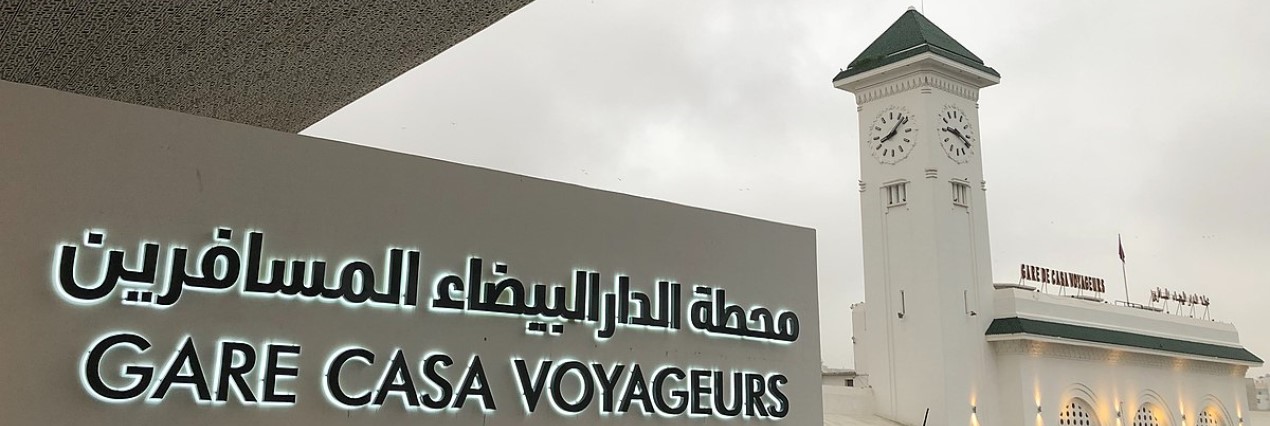
With the construction of the new Casablanca–Tangier Med railway line, the European rail network effectively extends as far as Casablanca, which has become Africa’s first high-speed station and gateway to a metropolis of over 4 million inhabitants.
FS Engineering, in a joint venture with Italcertifer, has been engaged by ONCF (Office National des Chemins de Fer) to design, supply, install, and commission the lineside safety and signalling systems. The infrastructure, divided into the two sections – Casablanca–Kenitra and Sidi Yahya–Ras R’Mel – spans a total length of 370 km, allows for a maximum operating speed of 220 km/h, and is equipped with an ERTMS Level 1 signalling system.
The main stations involved – Roches Noires, Casa Voyageurs, Triangle Casablanca and Ain Sebaa –play a strategic economic and operational role by connecting the centre of the country with the main urban and suburban areas, as well as integrating with the existing transport networks.
The Casablanca–Tangier Med line project is a flagship example of international cooperation and a strategic milestone in the development of high-speed rail in Africa, helping to strengthen Euro-Mediterranean connectivity, the sustainability of the transport system, and the adoption of European engineering standards.
The works were completed in 2018.
NEW CASABLANCA HIGH-SPEED RAILWAY STATION
FS Engineering was awarded first prize for the design of the new Casablanca high-speed station, as part of the international design competition organised by the Moroccan Railways.
The project involved the construction of an elevated structure, suspended 19 metres above the existing tracks, with a covered area of approximately 14,000 m², directly connected to the historic colonial-era passenger terminal.
Integrated with the urban public transport network via the city’s tram system, the new station also serves as an urban hub, reconnecting two adjacent neighbourhoods currently divided by the track bed. The project is also a significant opportunity for urban development and regeneration, with the creation of a multi-service hub that can enhance the urban fabric and improve accessibility to and the quality of public spaces.

