The strategic link between the Ligurian port system and Europe
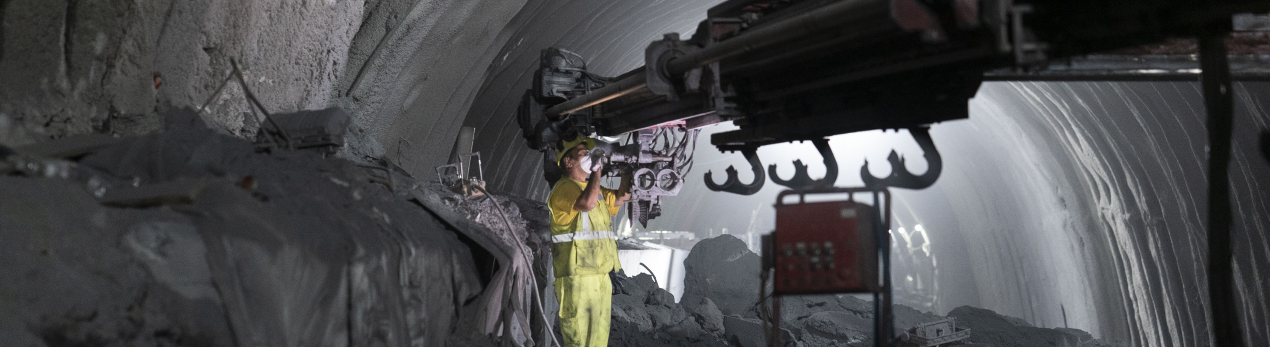
The Third Giovi Pass Base Tunnel and the Genoa Hub represent one of the major railway infrastructure projects currently under construction in Italy. They form a key component of the European trans-European transport network (TEN-T) Rhine–Alps Corridor, the continent's most important north-south transport axis along which the largest share of freight traffic is concentrated. The corridor connects the main European industrial systems—spanning the Netherlands, Belgium, Germany, Switzerland, and Italy—linking the North Sea with the Mediterranean and significantly strengthening connections between the ports of Northern Europe and the Upper Tyrrhenian Sea ports.
The role of FS Engineering
FS Engineering is responsible for overall supervision and works management of the entire infrastructure system. The project will significantly enhance connections between the Ligurian port system, the north Italian railway network, and the main European routes, consolidating Genoa’s role as Northern Italy’s principal seaport and interport.
The new Terzo Valico dei Giovi HS/HC line
The new Milan–Genoa – Terzo Valico dei Giovi high-speed/high-capacity line stretches for approximately 53 km, with the majority of the route running underground (around 80 per cent), and is designed for speeds of up to 250 km/h. The route features three main cut-and-cover tunnels—Valico, Serravalle, and Campasso—along with strategic interconnections with the existing network. The key element is the Valico Tunnel, which is approximately 27 km long and equipped with four access points. This base tunnel enables the line to overcome the challenging topography of the Ligurian Apennines, ensuring high performance in terms of rail traffic capacity, regularity, and interoperability. The interconnections at Novi Ligure provide a link to the Genoa–Turin line, whilst on the Genoa side, the interconnections at Voltri ensure a direct link to the port, the Voltri link road, and the Genoa–Ventimiglia line.
The upgrading of the Genoa rail hub
The project includes the upgrading of the Genoa rail hub, aimed at the functional separation of traffic flows between regional/metropolitan services and freight and long-distance services. The main works involve the quadrupling of the Genoa Voltri–Sampierdarena section and the sextupling of the Genoa Principe–Brignole section, with significant benefits in terms of capacity, punctuality, and service reliability. Within this system, the Genoa Campasso facility plays a strategic role as a logistics hub serving the historic port, functioning as an interport where complete trains can be formed bound for the main national and European destinations.
Infrastructure integration
The project ensures full integration between the new line and the existing network via the connection with the Bivio Fegino–Campasso–Porto Storico section and the Giovi Branch Line. Under Law No. 55 of 14 June 2019 (for speeding up major infrastructure projects), the works relating to the Terzo Valico Base Tunnel, the Genoa Hub, and the Voltri–Brignole and Genoa Campasso interventions have been rolled into a Single Project, thus consolidating an integrated and systemic approach to the construction of the infrastructure.
Sustainability, resilience and benefits
The project is fully consistent with European objectives on sustainability and modal shift, enabling the transfer of significant volumes of freight traffic from road to rail, with tangible benefits in terms of reducing climate-changing emissions, safety, and quality of life in the areas it passes through. In the urban section, the separation of traffic flows will facilitate the development of metropolitan and regional services, improving the overall efficiency of the transport system. The project is also part of an advanced vision of infrastructure management, which views regional sections as integrated and interdependent systems. In this context, particular attention is paid to safety and resilience, through a systemic approach to risk prevention—particularly in areas characterised by hydrogeological fragility—and to the capacity to respond to extreme natural and climatic events.
The works are scheduled for completion by 2026, representing a strategic step towards strengthening the competitiveness of the national logistics system and integrating the Italian rail network into the European context.
| KEY ROUTE FIGURES |
| Total length of the line: 53 km |
| Tunnel length: 37 km |
| Length of interconnections: 13 km |
| Maximum gradient (line and interconnections): 12.5 ‰ |
| Minimum curve radius: 4,500 m |
| Maximum design speed: 250 km/h |
| Electrification: 3 kV |
| Signalling and control system: ERTMS Level 2 |
| Axle load: D4 |
| Gauge: P/C80 |
| Limit gauge: GABERIT C PMO 5 interoperable |