The main railway upgrade project in Southern Italy
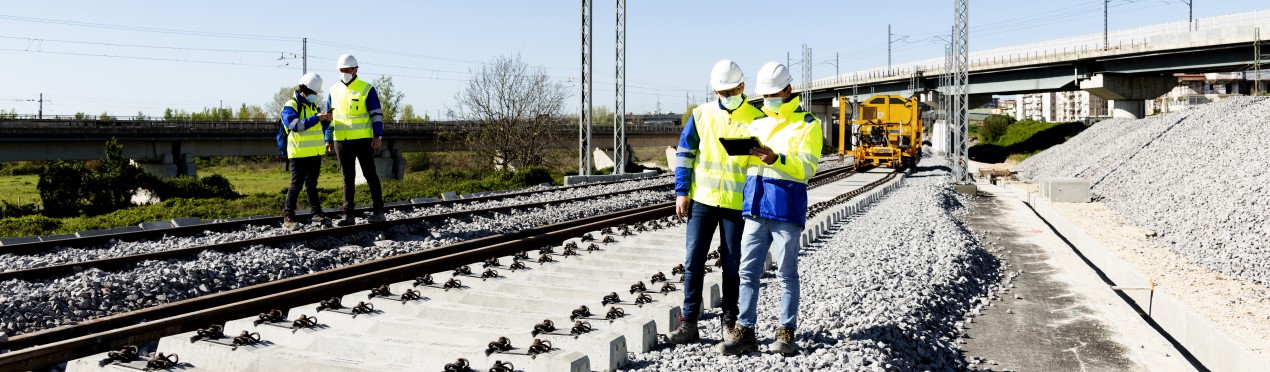
The new Naples–Bari railway line is one of the most important infrastructure projects currently under construction in Southern Italy and forms an integral part of the European TEN-T Scandinavia–Mediterranean Corridors (Helsinki–Valletta). Partly funded by NRRP (National Recovery and Resilience Plan) funds and provided for under the ‘Sblocca Italia’ Decree-Law, the project is strategic for improving links between the Tyrrhenian and Adriatic corridors, contributing to the overall integration and competitiveness of the national rail system.
The role of FS Engineering
FS Engineering is involved in the design, site supervision, and coordination of processes for the entire route, contributing to the development of a modern, high-performance infrastructure linking Puglia, the inland areas of Campania, and the Milan–Rome–Naples HS/HC line.
The infrastructure project
Forming part of European TEN-T Scandinavia–Mediterranean Corridors, the Naples–Bari line involves upgrading and speeding up the existing route, as well as completing the doubling of the Caserta–Foggia section. This comprehensive scheme will deliver a total of approximately 121 km of new track, of which around 63 km running in underground tunnels. The project combines new construction and modernization of the network, including line doubling, route realignments, and widespread technological upgrades aimed at increasing capacity, punctuality, and operating speeds. A total of 14 new stations and stops are also planned, helping to improve accessibility to the regions along the route. Ultimately, the project aims to overcome the historic shortcomings of the link—previously characterized by gaps in the infrastructure, a highly winding route, and significant variations in performance—by creating a modern, efficient, and fully interoperable railway system at European level.
Progress of works
The Naples–Cancello bypass is the first operational section of the route and integrates the legacy network and the HS system via Naples Afragola station. Key milestones include the completion of the Monte Aglio tunnel, approximately 4 km long, between Maddaloni and Valle di Maddaloni, and the gradual commissioning of operational sections, including the Cancello–Frasso Telesino section. Work is continuing on the doubling of the Apice–Orsara section as part of the bypass project, the doubling of the Orsara–Bovino section, and the completion of the Bari junction. Once fully operational, journey times will be significantly reduced to approximately 2 hours between Naples and Bari, 3 hours between Rome and Bari, and around 4 hours between Lecce/Taranto and Rome.
Sustainability and integration into the local landscape
The project is being developed according to an integrated approach, with an emphasis on environmental sustainability and the appropriate integration of the infrastructure into the local landscape. Priority is given to the reuse of excavated materials and the regeneration of degraded areas, contributing to the environmental regeneration of the areas crossed by the line. Construction is accompanied by a comprehensive environmental monitoring system covering the pre-construction, construction, and post-construction phases, with results constantly shared with the Ministry of the Environment to ensure the overall sustainability of the project.
Benefits for the railway system
The project will ensure significantly increased capacity, reduced journey times, and improved service quality, promoting a modal shift in passenger and freight traffic while contributing directly to reducing CO₂ emissions. The new infrastructure will also help to reduce interference with the legacy network, including through the removal of level crossings and the rationalisation of railway assets, thereby improving the reliability and safety of the system. Overall, the Naples–Bari line represents a key infrastructure for the development of Southern Italy as a whole, and for strengthening the integration of the Italian rail network with the European context, contributing to the creation of a more efficient, sustainable, and competitive transport system.
| KEY PROJECT FIGURES |
| Line length: 250 km |
| Length of interconnections: 130 km |
| Maximum speed: 250 km/h |
| Electrification: 3 kV |
| Signalling technology: ERTMS Level 2 |