Social Sustainability
A technically perfect solution is still not enough if it’s not the best solution for the community as well
The sustainability of an infrastructure project depends heavily on an in-depth understanding of the local area and the study of its impacts on communities and wider society. At FS Engineering, every design option is assessed within a Multi-Criteria Decision Analysis (MCDA) framework. In addition to traditional environmental impact indicators, this framework incorporates socio-economic metrics, which allows us to quantify the infrastructure's added value to the quality of life for residents and passengers, ensuring that different options are compared equally on their transit performance.
For every project, options are benchmarked against social indicators developed specifically for the rail sector. Regional reconnection, noise exposure, travel time savings, and the impact of construction sites are just some of the criteria used to deliver an infrastructure asset that remains in harmony with both the landscape and local communities.
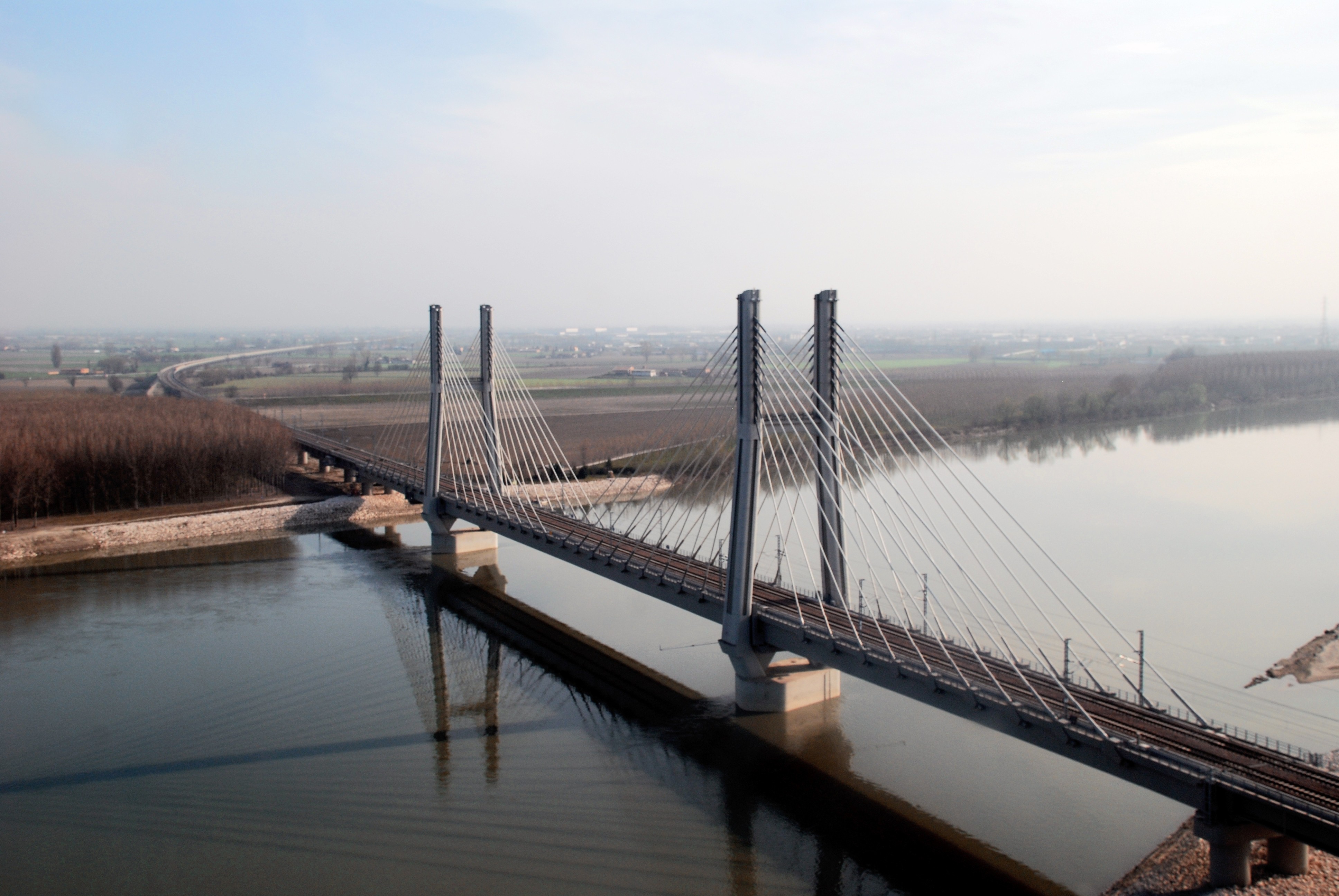
A tangible example of FS Engineering’s commitment to these priorities is the Voghera–Piacenza line upgrade project.
The primary objective in this case is to modernise and speed up services on the existing railway line while keeping all current stations and local stops along the route intact.
The rail section covered by the project spans the Lombardy and Emilia-Romagna regions, crossing several local authorities and areas of strategic importance for regional transit.
The intervention involves a series of technical works and upgrades designed to reduce journey times and boost operational efficiency without requiring the relocation of existing infrastructure assets.
Two design options were evaluated:
- OPTION 1: Line speed improvements via bypass sections (off-line alignment)
- OPTION 2: Line speed improvements along the existing alignment (on-line alignment)
The options were benchmarked using a Multi-Criteria Decision Analysis (MCDA) in which social sustainability carried significant weight in selecting the final track alignment.
The social and community indicators used in this analysis were:
- Noise exposure for local residents
- Compulsory purchase order (CPO) footprints per kilometre of track
- Average journey time savings compared to current schedules
- The climate impact of the construction phase (an environmental metric with direct social consequences)
Following a comparison of the two options, Option 2 emerged as the higher-performing and more socially sustainable solution, winning by a margin of over 51 points out of a total score of 100. It outperformed the alternative particularly across two key indicators:
- Compulsory Purchase: Upgrading the line along its existing alignment minimises the need for compulsory purchasing and the impact on the local community.
- Carbon Footprint: The construction phase generates significantly lower CO2 emissions, mitigating negative impacts on the environment and the health and well-being of the public.
A Continuously Evolving Framework
This methodology is continuously refined by increasingly precise assessments. These are informed not only by regional statistical and demographic data but also by public surveys and sentiment analysis, utilizing both traditional tools and innovative solutions like a digital social web monitoring platform and the Social Life Cycle Assessment (S-LCA) model.
FS Engineering’s framework for assessing the social and socio-economic impacts of infrastructure was showcased at the 6th International Symposium on High-Speed Rail Socioeconomic Impacts. Developed in partnership with the FS Research Centre, the study identified new ways to integrate diverse socio-economic assessment methodologies into the design and construction phases of high-speed rail infrastructure projects.
The primary objective of this research is to map out the main analytical approaches and explore potential integrations and synergies between different appraisal models, contributing to the development of a more coherent and operationally viable methodological framework.
Following a structured literature review to establish the current state of the art, the study identifies the comparative strengths of each approach and discusses prospects for their methodological integration. In doing so, it aims to provide infrastructure decision-makers and designers with concrete, actionable methodological benchmarks across all stages of the design process.
The findings are intended to support a more robust, transparent, and socially conscious decision-making process in the planning and delivery of high-speed rail corridors.
Social LCA: Shifting Focus from Environmental to Social Impacts
Among the methodologies included in the framework, the Social Life Cycle Assessment (S-LCA) model is the subject of extensive research and pilot testing within the design phase. While still rarely applied in the rail sector, it is based on an international protocol developed by the UNEP (United Nations Environment Programme) that applies "life-cycle thinking" to the integrated assessment of social impacts across a project's entire value chain and asset lifespan.
In practice, S-LCA identifies "risk hot spots" for social sustainability: specific geographical areas, construction phases, or legal domains where a project's impact on stakeholders could be most critical. The UNEP methodology isolates specific stakeholder categories—such as workers, local communities, and supply chain actors—alongside impact categories like health and safety, labour rights, and community development. It collects or estimates qualitative and quantitative data across the entire supply chain, from raw material extraction through to decommissioning and end-of-life asset disposal.
From Research to the Construction Site: The Life SILENT Project
With this outlook, FS Engineering is piloting the integration of S-LCA and Life Cycle Costing (LCC) with the Environmental Life Cycle Assessment (E-LCA) already in use. This approach aims to determine the comprehensive sustainability of an infrastructure asset using increasingly advanced, internationally recognised methodologies.
A tangible example is the application of this protocol to the Life SILENT project—a collaborative initiative within the FS Group that brings together ANAS (the highway authority), RFI (the rail infrastructure manager), and prestigious university partners and research centres to trial new noise mitigation materials along road and rail corridors. Specifically, the S-LCA methodology is being deployed to measure the social sustainability of a new type of low-noise asphalt made from recycled plastics, as well as low-height noise barriers constructed from experimental metamaterials.
The findings from the four-year Life SILENT research initiative will be published upon project completion in 2028.
Conclusion
In Italy, the regulatory framework governing social impact assessments for infrastructure schemes remains fragmented and evolving. FS Engineering is actively investing in the research, development, and deployment of methodologies that enhance the social value of rail networks. By adopting this pioneering role, the company aims to serve as a blueprint for the widespread adoption of sustainability principles across the wider industry.